Wednesday, July 21, 2010

Chau, Tumpa

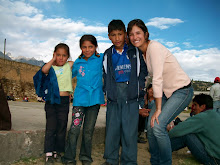
Well, it's official! I completed my service in Tumpa as a Youth Development Volunteer this week! I now live in Huaraz where I will work as the Peace Corps Volunteer Leader in Ancash for one year. Completing and/or facilitating the management of my projects over to my community partners was the easy part... saying goodbye to my host family, neighbors, and students was something else entirely. I'm in a strange situation because I'm leaving Tumpa, but I'll be living within 1.5 hours of the community for a whole other year. In most cases, it was "Hasta Luego," and not "Adios para Siempre," but regardless of that distinction, Tumpa and I both knew that it would never be the same. Most likely, I'll visit my host family once a month to have lunch and catch up, but I won't see my students at the regular youth groups anymore. The last week in site was the ipodimy of the Peace Corps Roller-Coaster Ride: difficult, fun, stressful, tear-filled and bitter-sweet; but I was able to spend quality time with those people most important to me. Highlights included making bread with 2 favorite Baker families, my despedida (goodbye party) lunch with my host family featuring Picante de Pato con Yucca (yum!), getting surprised with an amazing "Congratulations, you did it!" home-made cake from my site mate, Kaitlyn, and the school Anniversary party - think: marching parades, healthy foods competition, indigenous dance performances, Huayno and drinking circles. It was an incredible two years, the best of my life, and I'll be processing the profundity of my experience for many years to come. Chau, Tumpa.

Pictures of my last days in Tumpa: http://www.facebook.com/album.php?aid=2204844&id=7403642&l=b215bdde6d

****
New Favorite Book: The Tipping Point (I know, I should have read it a long time ago)
Special Leave plans: Amazon Jungle Trip and Connecticut/Canada Tour!
Up Next: PCVL of Huaraz starting August 18th

Wednesday, June 2, 2010

Mucho en Mayo

At least I can't say I'm bored. As my Peace Corps service winds down, my work and life is busier than ever, and I'm going full-speed. After taking my GRE at the beginning of May, I met my Peru 11 group in Lima for our Close of Service conference. COS is a time for volunteers to get together to reflect on their service and think about the future, about what's next. Many of my friends are off to various graduate programs this fall, others are returning home to their families and leaving options open, and a lucky few are going to backpack through South America and explore the rest of this incredible continent. My "what's next" is still up in the air - there's a Plan A and a Plan B, and I'll be solidifying my plans sometime very, very soon.


After COS, I returned to Ancash and went on a Site Development trip with the Director of the PC Youth Development program. We visited 4 communities and met with community leaders including mayors, municipality workers, health center staff, school Directors and teachers, and other interested leaders and involved community citizens. We discussed Peace Corps and the potential of sending a PCV to these sites for 2 years - what kind of work would be available to the volunteer? who would be the community partners? where would the volunteer live? It was a really exciting and fun experience to be on the "other side" of the Peace Corps world and see what goes into Site Development before the PCVs get to their sites. I loved meeting new people from new towns, local leaders who are so excited at the prospect of having a gringo live and work in their communities on development projects and programs. It was refreshing, and gives me that extra revitalizing push that I need at the end of my service - knowing that after I leave site, life still continues here... and I digress.
Mother's Day was great - I treated my host mom, sister and baby brother to lunch and a day in Huaraz. We walked around the Plaza de Armas, took pictures, listened to some street huayno music and enjoyed the city. Maria, my 14 year old host sister, hadn't been to Huaraz in 7 years... It was a big day for her... followed up by an even bigger weekend...


CAMP ALMA! Shannon and I co-coordinated this leadership camp for teenage girls and it was a huge success! All of the Ancash PCVs invited 2 girls from their respective sites, and we all reunited in Yungay for the 3 day camp. I brought Maria and one of my student health promoters. We talked about women's rights, volunteerism, feminism, gender roles, sexual health (condom race included!), disabilities and diversity. The girls planned a mini-project on how to take the information they learned at the camp back to their communities and keep the learning process going. We tie-dyed tshirts, put on a Gringos Saludables play on gender roles, roasted smores by the bonfire, and featured a vegetarian menu to share an American custom/lifestyle with the girls. The weekend was months in the making, and ALMA turned out to be one of the best and most fulfilling events of my PC service.


After ALMA, I attended a 3 day HIV/AIDS promotion and prevention workshop. Peace Corps has access to PEPFAR (US President's Emergency Plan for AIDS Relief) funds so that PCVs can finance community-based projects to educate the youth on HIV/AIDS. The Department of Ancash is going to receive a large portion of these funds because the incidence of HIV/AIDS here is significant and growing rapidly. Chimbote is Ancash's second largest city and a bustling fishing port and the prevelance of HIV/AIDS is high. Economic migration from the Andes to this costal town and back again is one of the causes of this adverse phenomenon and is spreading the virus around the Department. So Peace Corps will be pushing a strong HIV/AIDS prevention initiative in the Ancashino classrooms and communities. The conservative and shy culture will present its challenges to our effectiveness, but I think the initiative is well worth it and has the potential to keep people healthy and HIV free.

From the HIV/AIDS conference I went back to Lima and ran my second complete Social Theater In-Service Training, this time with Peru 13 Youth Development volunteers and their community partners. The 3 day IST went really smoothly and I got to know the Peru 13ers a lot better. They're doing great work across the country, and now they have more active learning techniques and tools to add to their teaching methodologies in their sites. Alex (my Social Theater partner) and I have almost finished the Manual, and should be sending the final copy to Washington within a couple of weeks. This Social Theater Manual could then be distributed to Peace Corps posts worldwide to assist PCVs in training others on Social Theater in Service to the Communitites.


So during May, I spent time traveling back and forth between Ancash and Lima attending conferences, leading camps, and spending time in the office. I barely spent time in Tumpa with my students or host families, and I'm looking forward to getting back there to spend these last precious moments with my Peruvian friends, family and neighbors. But before that, I'm showing my sister Mary and her husband around Ancash! I haven't seen them in 2 years, and we've been having an incredible family reunion up here in the mountains! Life is good.

****
Book Reading: Once Minutos, Paolo Coehlo
Time left in Tumpa: 7 weeks
Up Next: Trip to Florida for Anna-Baine's wedding! First time to the USA in over dos años...

Tuesday, April 27, 2010

A quick update

I've been terrible about posting lately because I've been so busy. The Healthy Schools project is in full swing - I finished a 5 week tooth brushing campaign and organized a successful community clean-up in honor of Earth Day. I've been working on self-esteem with the kiddies and life planning with the teenagers, I'm meeting with my Student Health Promoters three times a month, training the teachers on environment, hygiene and nutrition, and I've been planning ALMA - a leadership camp for teenage girls. On top of all that, I'm studying for the GRE and looking forward to my Close of Service Conference next week. In between it all, I'm trying to eat, workout and sleep when I can. Hence, no blogging in a while. But I'm still alive, things are great, and the rainy season is over. The next time I post I will probably have some big news, so stay tuned. :)

Here are some pictures of the Community Clean Up on Earth Day, my Tooth Brushing Campaign, and my Student Health Promoters.


***
Book Reading: Same one, no time.
New culinary frontiers broken: Host mom served pigeon for lunch.
Months left in Tumpa: 3.
New favorite blog: HyperboleandaHalf.blogspot.com. Delightful.

Wednesday, March 17, 2010

Nothing is as it seems...

After teaching class today, I stopped by the primary school to check out the local NGO’s health campaign. The Doctora in Tumpa had given me the heads up, saying that she and the NGO workers would be administering fluoride and providing physical exams to the kids. When I walked in the room, posts were set up around the perimeter: the weight/height station, the fluoride station, the pharmacy station (we'll get to that later), the Doctora’s station, and the letters/pictures station. I greeted everyone in the room and went to sit with the doctora, who was alone, looking extremely bored.

“This is taking so long… there are still so many kids left,” she said.
“Oh well right, but, this is a really great thing that you all are doing for the kids – the free health care, and all” I commented.
“Ehhh… not exactly,” she said.

The Doctora proceeded to explain that this health campaign was less than perfect. The physical exams are given during school hours, but in order to administer any medicine or treatment, parents must be present… and there were no parents around when I was there. Also, there was barely any medicine. Despite being examined, the children were not receiving the full health care they needed. Suddenly it seems like they were putting on a big show…and my eyes drifted to the…letters & pictures station. The kids were drawing pictures and writing cards to their overseas sponsors, whose donations probably made their physical examinations possible that day. For those of you back in the US who have donated to an organization to benefit kids, and have at one time wondered where your money is going, well, here’s a snapshot.

Saturday, March 13, 2010

School's in Session!


It's a beautiful, chilly, overcast Ancash morning. I'm in Huaraz for our monthly meeting. On the agenda this month: composting, which will come in handy once my students learn to separate organic and inorganic waste. Also up is an ALMA meeting - Shannon and I are going to take advantage of our captive PCV audience this weekend to talk about the girls leadership camp that will take place in May. These days, I have barely enough hours in a day, which is a Peace Corps (or maybe an Ancash) anomaly. March is zooming by.
School started up again on March 1st, and I've began installing the materials in the classrooms for the Healthy Schools project. I'm busy with hygiene workshops, tooth brushing campaigns (I can't be totally sure, but browning baby teeth are evidence that some of these kiddies are brushing for the first time ever!!), and self-esteem classes. On Monday, we're going to elect 10 health promoters, whom I will train on hygiene, nutrition and environmental awareness issues. The health promoters will be leading organic gardens projects, healthy food activities and community clean-ups with the other students at Santa Fe to strengthen our Healthy Schools project. School's back in session, the kids are back in Tumpa, I've got my work cut out for me, and I couldn't be happier with site!

****
Currently reading: What is the What
In-site delightful surprises: Internet in the adobe kitchen window!
Months until COS: 4.5
post-PC plans: Sophie Sees South America Adventure Sept-Dec 2010... who's in?!

Tuesday, January 26, 2010

Thoughts on Haiti: Huaraz All Over Again

In 1970, an earthquake the magnitude of 7.7 on the Richter scale hit off the coast of Peru and devastated the Andean department of Ancash, taking the lives of an estimated 80,000 people. Another 3 million were affected, making the quake the largest natural disaster in Peruvian history. Huaraz, Ancash’s capital city, crumbled to the ground. Ancash’s smaller villages were demolished; the adobe houses and buildings didn’t stand a chance. The quake destabilized the northern wall of Mount Huascaran, and towering at over 22,000 feet, the wall of the glacier broke off, creating a landslide of epic proportions that buried the urban town of Yungay. Only a couple hundred children and teachers survived the Yungay landslide because they were hiking on hills above the city, above the destructive reaches of the mud, ice, and debris that buried their town and families in the blink of an eye. The surviving children were dispatched to orphanages around the world.

Almost 40 years later, another massive earthquake devastates the impoverished island nation of Haiti. The statistics are shockingly similar: both Ancash and Haiti were impoverished areas before the earthquakes, both quakes left over 50,000 people dead and around 3 million affected, and both quakes completely destroyed basic and vital national infrastructure.

Today, Ancashinos sit in their adobe houses listening to the news come in about Haiti and are bitterly reminded of a not so far away past when they were living the same horror. Politicians and international aid workers should turn to Ancash as a developmental case study to help maneuver the unsteady waters of Haiti. What happens to an already impoverished society when a natural disaster strikes?

The earthquake in Ancash affected every aspect of the campasinos’ life, from family, culture, economy, infrastructure, and personal identity. Homes turned to dust. Crop fields were destroyed. Livelihoods were lost. Parents, siblings, and friends perished into the ground. Communities were destroyed. Access to drinkable water became the key to survival. The shock these losses take on a person’s self-esteem and self-worth are immeasurable. Peru lacked the resources to help their own people and turned to the outside world for rescue. What resulted in Ancash was a massive influx of international aid and support; richer, developed nations and organizations like the Inter-American Development Bank and the World Bank sent food, medicine and manpower in hoards. Survivors of the earthquake in Tumpa, my Peace Corps hometown, tell me about the planes that would drop boxes filled with clothes and medicine out of the sky.

One of the major challenges Peace Corps volunteers in Ancash face today is what we call the “culture of receiving.” Since 1970, Ancashinos have become accustomed to receiving international aid, mostly in the form of money. Whether the financial aid comes from NGOs with health, educational or micro-business missions, or from mining companies seeking to pacify exploited communities with quick and glamorous development projects, Ancashinos are in the habit of receiving money. Eager Peace Corps volunteers who are broke by default seek opportunities to start grassroots development projects, but often are not taken seriously, because to the Ancashino eye, a Gringo equals a greenback. Starting sustainable development projects in the Ancash communities without applying for grants is difficult and rare. And this might be because of how the outside world reacted to the earthquake of 1970.

When a national disaster strikes, basic human morality implores those of us capable to help those of us in need. International financial aid and involvement over a period of time is certainly necessary after major natural disasters wreak havoc on impoverished societies like Ancash and Haiti. But once the proverbial dust has settled, is continued international aid sustainable? When does international financial aid stop helping and start stripping a society of its national fabric and sovereignty? What happens to national and personal responsibility and self-esteem? In Tumpa, I often encounter a general lack of motivation, low self-esteem and apathy in the townspeople. Is 40 years of outside financial involvement more beneficial or detrimental to the growth and development of people from societies like Ancash? Did our morality in 1970 take a long-term demoralizing effect on these people?

Alternatives to long-term international financial involvement in response to natural disaster situations could include development programs like the Peace Corps Response, whose volunteers donate a few months to a year to educate people on healthy lifestyle techniques or micro-business strategies to help in the transition from crisis situations to peace. More widely known is the Peace Corps, whose volunteers live and work in developing countries partnered with host country nationals who seek to empower positive change and growth in their own communities. One human being extending a helping hand to another, offering knowledge instead of cash, is a resource that should not be underestimated. The international community should examine alternative options to financial aid that help developing communities transition to build their own countries with dignity so the citizens can really “own” their development.

Despite our academic knowledge, history continues to repeat itself. The role of international aid in times of crises like these must be examined carefully. If the Haitian people want to become a sovereign, self-sufficient, developing nation, the international community might examine appropriate alternatives to providing aid other than throwing money at the problem. Otherwise the Haitians might rely too heavily on financial support for the foreseeable future, obstructing the way for organic national development.


*Special thanks to Tim for inspiring me to write this.

Wednesday, January 13, 2010

Healthy Schools Program, Tumpa, Peru


Since my arrival in Tumpa, I have worked on the Healthy Schools Program with the Health Post and Santa Fe school to reinforce healthy lifestyle behaviors in the youth, specifically in the areas of hygiene, nutrition and environmntal awareness. We have tackled these health problems with the youth by discussing and pacticing handwashing, bathing, toothbrushing, healthy meals, and trash management. After over a year of training and preparation, my Healthy Schools Program in Tumpa is becoming a reality! Peace Corps, Washington has approved my grant proposal and posted the project to the Peace Corps website. We are ready to take the Healthy Schools Program to the next level, and we need your help! Please pass on this email to any philanthropic friends who would like to donate and improve the lives of the Peruvian youth in my community. Below you will find a brief description of my project with instructions on how to donate.

Hygiene, nutrition and envionmental practices in Tumpa´s youth are very poor. Healthy lifestyle behaviors are seldom taught or reinforced in the home or school. Tumpa´s Health Post and Santa Fe school see the opportunity to strengthen healthy lifestyle behaviors in Tumpa´s youth through dynamic trainings and workshops; however, materials and supplies like trash cans and soap dispensors that reinforce these behavior changes do not exist and are needed. I need your help to improve healthy lifestyles in my Peruvian students!

Please visit the Peace Corps website to view the Healthy Schools Program profile, and please donate to improve the lives of my Peruvian students!


Go to the Peace Corps website at: peacecorps.gov
Click on ¨Donate Now!¨
Enter my last name ¨Dila¨ or my project number 527-015

OR
Click on this link: https://www.peacecorps.gov/index.cfm?shell=resources.donors.contribute.donatenow
and enter Peru in Search by Country of Service

Muchisimas Gracias!

****
¨La posibilidad de realizar un sueño es lo que hace que la vida sea interesante¨ -Paulo Coelho