Wednesday, August 3, 2011

Dispelling Myths

So as most of my readers know, I’m finishing up my third year in the Peace Corps serving as a Volunteer Leader and working in Huaraz, the capital city of Ancash, Peru. I’ve focused my time working with 50 teenaged youth on sexual health promotion and teen-pregnancy, STI and HIV prevention through the support of a small PEPFAR grant. Although one year is not much time in the educational spectrum, the lessons learned were enlightening for them and for me.

Ancash is located in the Andes Mountains of Peru, and the primary language in the rural towns outside the capital city of Huaraz is Quechua. The people are descendants of the Incas and retain more cultural influence from their ancestors than of the Spanish, who conquered Peru in the 1500s. The Incan roots in the Ancashinos are evident in the language, the farming and agricultural techniques, the spiritualism, and the health practices. Let's focus on the latter. I have learned of myriad health myths - ancient beliefs - and I have had the opportunity to dispel some of them during my classes. Here are a few gems:

• If a woman stands in the rays of a rainbow, she'll become pregnant.

• Eating Peruvian lemon on your period will stop your cycle and endanger your reproductive system.

• Women on their period cannot bathe or engage in physical exercise; these activities could be harmful to her health.

• Men have more sex drive than women.

• Men with larger penises are more sexually powerful than men with smaller penises.

What I’ve realized working in Peru is that so much of sexual education in a developing country is related to addressing gender inequality. “Machismo,” the belief of masculine superiority that systematically and culturally marginalizes women, is an ingrained social issue in Ancash. On their final exams, my students generally scored high, and through conversations, I know that they’ve learned many truths about sexual health. So if I’ve played a tiny part in the grand scheme of gender inequality by dispelling myths and empowering my female students, I’d say that’s a success.

Sunday, June 26, 2011

Ode to Peru (and the places you'll go)

Oh, my carelessness, my neglect. Profound apologies to this lonely webpage. One that has documented so many of my journeys, adventures, ups, downs and all-arounds of the past three years of my life in Peru. Now the clock is tick-tocking, and with this impending, inevitable "fin" in sight, I feel I still have some things to say, and that I can't leave with these things left unsaid.

If there was ever a doubt in your mind of my undying passion for food, well, rest assured, I'm obsessed. Recently, I was asked what my favorite things are: Simply put, food is the top of my list. Cooking, experimenting, eating & sharing it. Other high rankers are music/dancing (going hand-in-hand, of course), soaking in the rays of the sun, trying new things, and outdoor activities ~ hiking, skiing and beaching being the favs. Stay tuned for my "Ode to Comida Peruana."

Without a passion for my work, I'm lost. When everything else is falling apart, when parasites are ravaging my tired stomach, when friends leave and chapters end... if I still have my passion for my work, I'm OK. I see this with clarity now. If you're a PCV and your world is upside down, dive in to your work ~ it will probably change your life. And if you don't have work, lord knows I've been there, then reach out to someone who can help you kick-start this thing. Si se puede.

Now we know I love my Southerners, but it just doesn't get better than Peruvian hospitality. "Mi Casa es Tu Casa." Seriously. It's yours if you want it. In all seriousness though, Peruvians bring new meaning to the phrase "sharing is caring." If my host family in Tumpa has 10 people around the table and only one small piece of meat, you can bet that everyone's getting a bite. This morning, a little granny insisted on putting me in a cab, declaring that taxistas are unjust and she wouldn't have me paying more than a centavo too much. In Lima, at "Friends House," the Peace Corps hostal, the owners know all of our names. All of us who have passed through over the years. They know all of our sites. They probably know more than they'd like to, at times. And if it's your birthday, they'll make a huge deal over you with cake or wine. Sometimes cake and wine. Sometimes cake with little mini-beer candles on top. I'm taking this way of hospitality with me, wherever it is I may go.

Oscar Wilde once said, "I can resist anything but temptation." I have identified with and battled against that quote my entire life. Temptation is a dichotomous creature. In so many ways, she can lead you to new, beautiful adventures. Allowing yourself to be temped is taking a risk, and that drives me. When life is easy, I get bored. I just wouldn't be having fun if I weren't taking leaps of faith every now and then. I love trying new things, I love the feeling of adrenaline, and I love that I can continue reinventing myself every day. Living in Peru has allowed me to evolve in ways I couldn't have dreamed. Of course, temptation can be a dark mistress, and she can lead you into some risky business. But one thing's for sure: I'm growing up, I'm making good decisions, and I've got it pretty much under control. Otherwise, I would have gone rogue in the jungle by now.

This one time, I was accused by a community member for being an organ trafficker, and you know what? I might leave this country with my host siblings in my luggage. Maria was 12 ~ TWELVE ~ when I got here. Next month, I'm co-throwing her SIXTEENTH birthday party. Mexican tacos, music, balloons, and 20 of her friends. She's gorgeous and assertive, she's a great student, she's involved in youth groups, and the girl can spike a volleyball. Carlitos is almost two, and if he's within reach of his mama, he is clutching her breast for dear life. Hand down the shirt. His property. Back off, people. Mine. When I manage to pry him away from her, we walk (or run) around the Plaza holding hands. He loves toys, especially his truck that his godfather Rabbit gave him. It's barely recognizable now. Carlitos wasn't even there when I arrived three years ago. My, how my life has changed.

And I leave you, for now, with this last thought: "The only constant is change, continual change, inevitable change." Que Viva.

Friday, February 4, 2011

Smoke Signal

I need to try to express how incredible, dynamic and exciting my life is right now. I’m pinching myself. What did I do to make this happen?

I’ve been on the road. As the Ancash PCVL, I've had the amazing opportunity to discover more of Ancash than ever would have been possible during my first two years of service. I spend hours in dusty, crowded combis, listenting to my ipod, watching he mountains pass by, to get to volunteers in their communities and provide support by monitoring their work and talking about life. I spend days in sites spending time with volunteers and their host families, community partners and friends - eating, chatting, walking around town, visiting local institutions or attractions like trash sites, latrine projects or green houses. And every time, I’m reminded of my experience in Tumpa – the discoveries, the joys and the frustrations of being a Peace Corps Volunteer in Ancash.

I spend a lot of time coordinating and running around Huaraz with Nelly, Ancash’s beloved Regional Coordinator. I put on my business casual and we visit the Ministries of Education, Health and Environment to strengthen relationships, learn about new initiatives, and inform their staff about our volunteers' progress in the field. Nelly is the most motivated, driven, passionate and dedicated Peruvian woman I have ever met, and she's taught me a lot about the ins-and-outs of Peruvian government, bureaucracy and culture.

My work with youth has only been more exciting since living in this city. Huaraz has a population of over 100,000 residents, and I work with the Health Center Huarupampa that serves just half of that population. With my partner, Mari, I’ve been teaching a group of student peer educators at a local public school on sexual education and HIV prevention. I also work with a youth group at a governmentally sponsored social center for neglected or abandoned children on healthy lifestyle issues like self-esteem, decision-making, and of course, sexual education and HIV prevention. After six months of work with these groups, I’ve managed to build and gain trust from the kids and I’m ready to delve deeper into sex-ed with them to keep them informed, healthy, and baby-free. A major reason I decided to stay for a third year in the Peace Corps was to develop more serious experience working in sexual education and HIV prevention, and I’ve discovered that this topic, and working with Latino populations, is my passion.

I’ve also gained a bit of policy experience in this new position. I sit on three Peace Corps committees: the Volunteer Advisory Council, the Peer Support Network, and the HIV Initiative Committee. Most personally fulfilling would be the latter group (read: arriba), but I enjoy being a part of and having input in the inner discussions of the current state and future of PC – Peru in all senses.

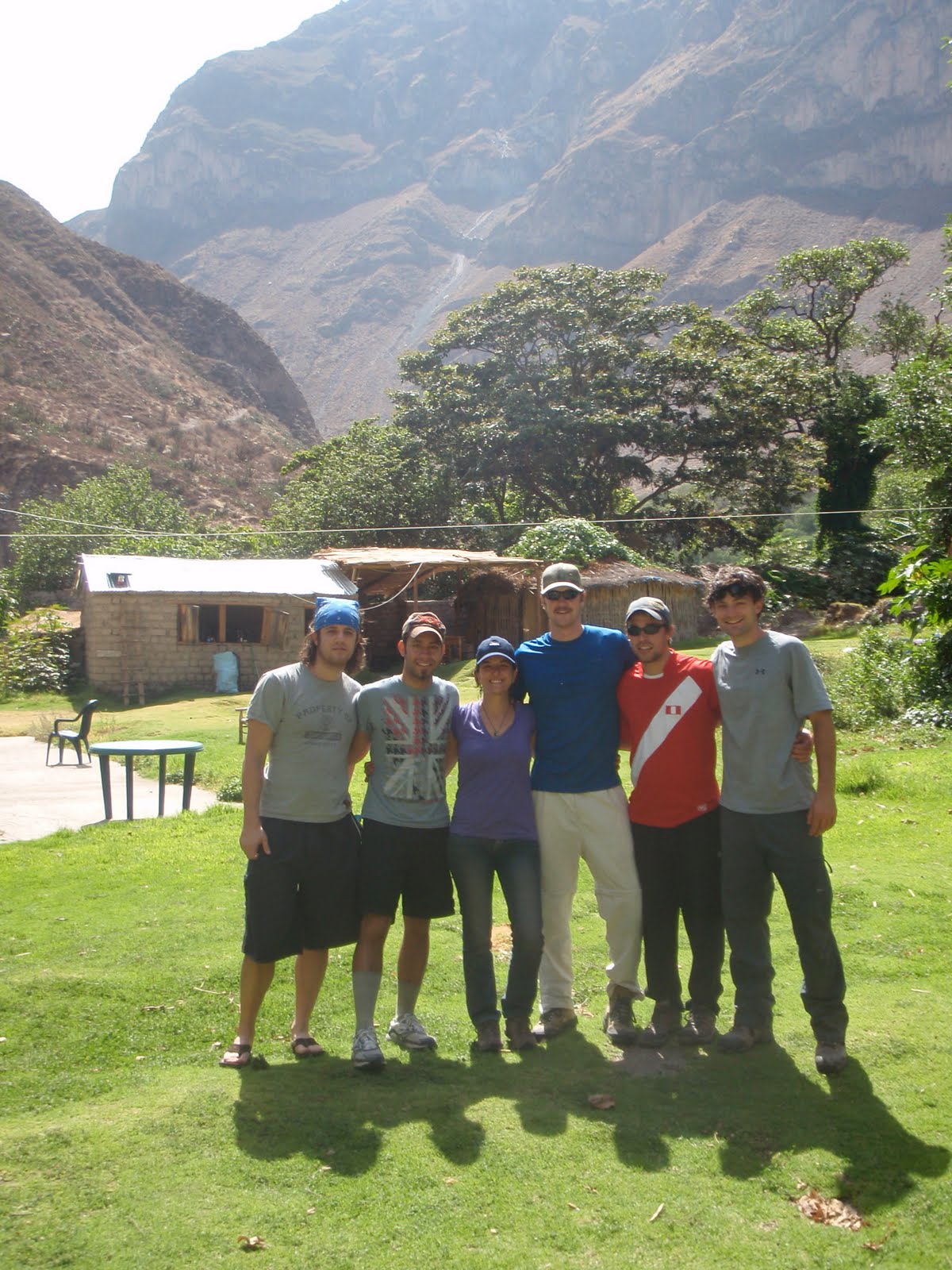
Ahora, next week, I will be departing on an on-foot adventure into the Andes Mountains with 5 PC friends, 2 Huascaran National Park Guards, and my backpack. We will head NE into and over the Cordillera Blanca to Pomabamba with the purpose of identifying new, potential PC sites and to set up a base-line for monitoring flora and fauna within the National Park lines. Jessica, our resident biologist and nature-freak, will head this scientific expedition and eschool us on the ins-and-outs of field biology. We will be gone for just over one week on this adventure, one that is sure to be the experience of a lifetime. I'll spend days leading up exercising, getting to bed early, and eating well to prepare for the trip.

Did I mention that my godson, Carlitos, is walking?!

And so I write this to send up a smoke signal, to profess my passion for my work, and to reiterate my undying love for this country, Peru.

***
Pictures of life lately: http://www.facebook.com/album.php?aid=2245454&id=7403642&l=f779c41100
New Years Resolution: Hecho.
Plans this month: To celebrate the 5th Anniversary of my 21st birthday, and to celebrate the 50th Anniversary of Peace Corps.

Wednesday, September 8, 2010

I'm A City Girl Now


So the new chapter has begun. I live in Huaraz and am serving my third year in Peace Corps Peru as the Volunteer Leader of the department of Ancash. Today marks four weeks back in Peru since my return from my special leave to America. My trip home was incredible and reminded me that I am, indeed, the luckiest girl in the world. The weather, the beach, the ocean, the food, my friends and family, the Welcome Home BBQ in CT, Mike, Moi, Maggie and Izzy spending the whole the long weekend with us in CT, reconnecting with my beautiful and AMAZING nieces, the weekend in New York City with Peyton, the visit at my mama's place in Montreal....It was heaven. Consider my proverbial batteries fully recharged.


Entonces, my Peruvian life continues. This month has been action-packed. I went from the US to Lima to Huaraz to Tumpa in 4 days (WOW - culture shock) and then I spent about a week in Lima for a bunch of different PC meetings. Reuniting with my Tumpa host family has been wonderful ~ I've been to visit twice so far and I think they really believe me now that I'll be keeping in touch and visiting them on a regular basis. Six new PCVs have joined our Ancash family and they're doing great! During their first few days in Huaraz, we went market shopping for beds, sheets, gas stoves, pots, pans, food, and other basic site newbie essentials. They're on their third week in site now, and todo tranquilo! They seem like a great group.


Yesterday, I started my work with two different youth groups here in Huaraz. I'll spend Mondays at a center for abandoned and neglected youth with about 25 at-risk teenagers and Saturdays with a group of about 25 student health promoters from a local public high school. I'll work with both groups on the whole spectrum of youth development themes: self-esteem, identifying values, vocational orientation, nutrition, hygiene, sexuality, HIV/AIDS, etc, etc, etc. The center will provide different challenges than the high school youth group, and I'm excited for these kids to keep me on my toes.


I'm totally in love with my new living arrangement ~ a small apartment connected to a modern Peruvian family's house. I have a full kitchen, i have an oven that i baked some chocolate chip oatmeal rasin cookies in last night (yum!), I bought a sweet couch in Lima, my electric shower is working (yay for hot water!), and I have internet! So, I guess it's sort of different from living in the campo in an adobe house...

Life is good.

****
Books: Just finished The Girl with the Dragon Tattoo (fabulous), revisited The Great Gatsby, and now on to Howard Zinn's People's History of the United States
Favorite moments this month: Buying my couch with our Safety and Security Officer, Enrique, in couchtown, Lima, and Ryan's visit to Ancash
Up Next: Site visits with Peru 13 Volunteers who just past the one-year mark in country, then back to Lima for med-checks, then site visits with Peru 15 to see how our newbies are doing after a month in site.

Wednesday, July 21, 2010

Chau, Tumpa

Well, it's official! I completed my service in Tumpa as a Youth Development Volunteer this week! I now live in Huaraz where I will work as the Peace Corps Volunteer Leader in Ancash for one year. Completing and/or facilitating the management of my projects over to my community partners was the easy part... saying goodbye to my host family, neighbors, and students was something else entirely. I'm in a strange situation because I'm leaving Tumpa, but I'll be living within 1.5 hours of the community for a whole other year. In most cases, it was "Hasta Luego," and not "Adios para Siempre," but regardless of that distinction, Tumpa and I both knew that it would never be the same. Most likely, I'll visit my host family once a month to have lunch and catch up, but I won't see my students at the regular youth groups anymore. The last week in site was the ipodimy of the Peace Corps Roller-Coaster Ride: difficult, fun, stressful, tear-filled and bitter-sweet; but I was able to spend quality time with those people most important to me. Highlights included making bread with 2 favorite Baker families, my despedida (goodbye party) lunch with my host family featuring Picante de Pato con Yucca (yum!), getting surprised with an amazing "Congratulations, you did it!" home-made cake from my site mate, Kaitlyn, and the school Anniversary party - think: marching parades, healthy foods competition, indigenous dance performances, Huayno and drinking circles. It was an incredible two years, the best of my life, and I'll be processing the profundity of my experience for many years to come. Chau, Tumpa.

Pictures of my last days in Tumpa: http://www.facebook.com/album.php?aid=2204844&id=7403642&l=b215bdde6d

****
New Favorite Book: The Tipping Point (I know, I should have read it a long time ago)
Special Leave plans: Amazon Jungle Trip and Connecticut/Canada Tour!
Up Next: PCVL of Huaraz starting August 18th

Wednesday, June 2, 2010

Mucho en Mayo

At least I can't say I'm bored. As my Peace Corps service winds down, my work and life is busier than ever, and I'm going full-speed. After taking my GRE at the beginning of May, I met my Peru 11 group in Lima for our Close of Service conference. COS is a time for volunteers to get together to reflect on their service and think about the future, about what's next. Many of my friends are off to various graduate programs this fall, others are returning home to their families and leaving options open, and a lucky few are going to backpack through South America and explore the rest of this incredible continent. My "what's next" is still up in the air - there's a Plan A and a Plan B, and I'll be solidifying my plans sometime very, very soon.


After COS, I returned to Ancash and went on a Site Development trip with the Director of the PC Youth Development program. We visited 4 communities and met with community leaders including mayors, municipality workers, health center staff, school Directors and teachers, and other interested leaders and involved community citizens. We discussed Peace Corps and the potential of sending a PCV to these sites for 2 years - what kind of work would be available to the volunteer? who would be the community partners? where would the volunteer live? It was a really exciting and fun experience to be on the "other side" of the Peace Corps world and see what goes into Site Development before the PCVs get to their sites. I loved meeting new people from new towns, local leaders who are so excited at the prospect of having a gringo live and work in their communities on development projects and programs. It was refreshing, and gives me that extra revitalizing push that I need at the end of my service - knowing that after I leave site, life still continues here... and I digress.
Mother's Day was great - I treated my host mom, sister and baby brother to lunch and a day in Huaraz. We walked around the Plaza de Armas, took pictures, listened to some street huayno music and enjoyed the city. Maria, my 14 year old host sister, hadn't been to Huaraz in 7 years... It was a big day for her... followed up by an even bigger weekend...


CAMP ALMA! Shannon and I co-coordinated this leadership camp for teenage girls and it was a huge success! All of the Ancash PCVs invited 2 girls from their respective sites, and we all reunited in Yungay for the 3 day camp. I brought Maria and one of my student health promoters. We talked about women's rights, volunteerism, feminism, gender roles, sexual health (condom race included!), disabilities and diversity. The girls planned a mini-project on how to take the information they learned at the camp back to their communities and keep the learning process going. We tie-dyed tshirts, put on a Gringos Saludables play on gender roles, roasted smores by the bonfire, and featured a vegetarian menu to share an American custom/lifestyle with the girls. The weekend was months in the making, and ALMA turned out to be one of the best and most fulfilling events of my PC service.


After ALMA, I attended a 3 day HIV/AIDS promotion and prevention workshop. Peace Corps has access to PEPFAR (US President's Emergency Plan for AIDS Relief) funds so that PCVs can finance community-based projects to educate the youth on HIV/AIDS. The Department of Ancash is going to receive a large portion of these funds because the incidence of HIV/AIDS here is significant and growing rapidly. Chimbote is Ancash's second largest city and a bustling fishing port and the prevelance of HIV/AIDS is high. Economic migration from the Andes to this costal town and back again is one of the causes of this adverse phenomenon and is spreading the virus around the Department. So Peace Corps will be pushing a strong HIV/AIDS prevention initiative in the Ancashino classrooms and communities. The conservative and shy culture will present its challenges to our effectiveness, but I think the initiative is well worth it and has the potential to keep people healthy and HIV free.

From the HIV/AIDS conference I went back to Lima and ran my second complete Social Theater In-Service Training, this time with Peru 13 Youth Development volunteers and their community partners. The 3 day IST went really smoothly and I got to know the Peru 13ers a lot better. They're doing great work across the country, and now they have more active learning techniques and tools to add to their teaching methodologies in their sites. Alex (my Social Theater partner) and I have almost finished the Manual, and should be sending the final copy to Washington within a couple of weeks. This Social Theater Manual could then be distributed to Peace Corps posts worldwide to assist PCVs in training others on Social Theater in Service to the Communitites.


So during May, I spent time traveling back and forth between Ancash and Lima attending conferences, leading camps, and spending time in the office. I barely spent time in Tumpa with my students or host families, and I'm looking forward to getting back there to spend these last precious moments with my Peruvian friends, family and neighbors. But before that, I'm showing my sister Mary and her husband around Ancash! I haven't seen them in 2 years, and we've been having an incredible family reunion up here in the mountains! Life is good.

****
Book Reading: Once Minutos, Paolo Coehlo
Time left in Tumpa: 7 weeks
Up Next: Trip to Florida for Anna-Baine's wedding! First time to the USA in over dos años...

Tuesday, April 27, 2010

A quick update

I've been terrible about posting lately because I've been so busy. The Healthy Schools project is in full swing - I finished a 5 week tooth brushing campaign and organized a successful community clean-up in honor of Earth Day. I've been working on self-esteem with the kiddies and life planning with the teenagers, I'm meeting with my Student Health Promoters three times a month, training the teachers on environment, hygiene and nutrition, and I've been planning ALMA - a leadership camp for teenage girls. On top of all that, I'm studying for the GRE and looking forward to my Close of Service Conference next week. In between it all, I'm trying to eat, workout and sleep when I can. Hence, no blogging in a while. But I'm still alive, things are great, and the rainy season is over. The next time I post I will probably have some big news, so stay tuned. :)

Here are some pictures of the Community Clean Up on Earth Day, my Tooth Brushing Campaign, and my Student Health Promoters.


***
Book Reading: Same one, no time.
New culinary frontiers broken: Host mom served pigeon for lunch.
Months left in Tumpa: 3.
New favorite blog: HyperboleandaHalf.blogspot.com. Delightful.

Wednesday, March 17, 2010

Nothing is as it seems...

After teaching class today, I stopped by the primary school to check out the local NGO’s health campaign. The Doctora in Tumpa had given me the heads up, saying that she and the NGO workers would be administering fluoride and providing physical exams to the kids. When I walked in the room, posts were set up around the perimeter: the weight/height station, the fluoride station, the pharmacy station (we'll get to that later), the Doctora’s station, and the letters/pictures station. I greeted everyone in the room and went to sit with the doctora, who was alone, looking extremely bored.

“This is taking so long… there are still so many kids left,” she said.
“Oh well right, but, this is a really great thing that you all are doing for the kids – the free health care, and all” I commented.
“Ehhh… not exactly,” she said.

The Doctora proceeded to explain that this health campaign was less than perfect. The physical exams are given during school hours, but in order to administer any medicine or treatment, parents must be present… and there were no parents around when I was there. Also, there was barely any medicine. Despite being examined, the children were not receiving the full health care they needed. Suddenly it seems like they were putting on a big show…and my eyes drifted to the…letters & pictures station. The kids were drawing pictures and writing cards to their overseas sponsors, whose donations probably made their physical examinations possible that day. For those of you back in the US who have donated to an organization to benefit kids, and have at one time wondered where your money is going, well, here’s a snapshot.

Saturday, March 13, 2010

School's in Session!


It's a beautiful, chilly, overcast Ancash morning. I'm in Huaraz for our monthly meeting. On the agenda this month: composting, which will come in handy once my students learn to separate organic and inorganic waste. Also up is an ALMA meeting - Shannon and I are going to take advantage of our captive PCV audience this weekend to talk about the girls leadership camp that will take place in May. These days, I have barely enough hours in a day, which is a Peace Corps (or maybe an Ancash) anomaly. March is zooming by.
School started up again on March 1st, and I've began installing the materials in the classrooms for the Healthy Schools project. I'm busy with hygiene workshops, tooth brushing campaigns (I can't be totally sure, but browning baby teeth are evidence that some of these kiddies are brushing for the first time ever!!), and self-esteem classes. On Monday, we're going to elect 10 health promoters, whom I will train on hygiene, nutrition and environmental awareness issues. The health promoters will be leading organic gardens projects, healthy food activities and community clean-ups with the other students at Santa Fe to strengthen our Healthy Schools project. School's back in session, the kids are back in Tumpa, I've got my work cut out for me, and I couldn't be happier with site!

****
Currently reading: What is the What
In-site delightful surprises: Internet in the adobe kitchen window!
Months until COS: 4.5
post-PC plans: Sophie Sees South America Adventure Sept-Dec 2010... who's in?!

Tuesday, January 26, 2010

Thoughts on Haiti: Huaraz All Over Again

In 1970, an earthquake the magnitude of 7.7 on the Richter scale hit off the coast of Peru and devastated the Andean department of Ancash, taking the lives of an estimated 80,000 people. Another 3 million were affected, making the quake the largest natural disaster in Peruvian history. Huaraz, Ancash’s capital city, crumbled to the ground. Ancash’s smaller villages were demolished; the adobe houses and buildings didn’t stand a chance. The quake destabilized the northern wall of Mount Huascaran, and towering at over 22,000 feet, the wall of the glacier broke off, creating a landslide of epic proportions that buried the urban town of Yungay. Only a couple hundred children and teachers survived the Yungay landslide because they were hiking on hills above the city, above the destructive reaches of the mud, ice, and debris that buried their town and families in the blink of an eye. The surviving children were dispatched to orphanages around the world.

Almost 40 years later, another massive earthquake devastates the impoverished island nation of Haiti. The statistics are shockingly similar: both Ancash and Haiti were impoverished areas before the earthquakes, both quakes left over 50,000 people dead and around 3 million affected, and both quakes completely destroyed basic and vital national infrastructure.

Today, Ancashinos sit in their adobe houses listening to the news come in about Haiti and are bitterly reminded of a not so far away past when they were living the same horror. Politicians and international aid workers should turn to Ancash as a developmental case study to help maneuver the unsteady waters of Haiti. What happens to an already impoverished society when a natural disaster strikes?

The earthquake in Ancash affected every aspect of the campasinos’ life, from family, culture, economy, infrastructure, and personal identity. Homes turned to dust. Crop fields were destroyed. Livelihoods were lost. Parents, siblings, and friends perished into the ground. Communities were destroyed. Access to drinkable water became the key to survival. The shock these losses take on a person’s self-esteem and self-worth are immeasurable. Peru lacked the resources to help their own people and turned to the outside world for rescue. What resulted in Ancash was a massive influx of international aid and support; richer, developed nations and organizations like the Inter-American Development Bank and the World Bank sent food, medicine and manpower in hoards. Survivors of the earthquake in Tumpa, my Peace Corps hometown, tell me about the planes that would drop boxes filled with clothes and medicine out of the sky.

One of the major challenges Peace Corps volunteers in Ancash face today is what we call the “culture of receiving.” Since 1970, Ancashinos have become accustomed to receiving international aid, mostly in the form of money. Whether the financial aid comes from NGOs with health, educational or micro-business missions, or from mining companies seeking to pacify exploited communities with quick and glamorous development projects, Ancashinos are in the habit of receiving money. Eager Peace Corps volunteers who are broke by default seek opportunities to start grassroots development projects, but often are not taken seriously, because to the Ancashino eye, a Gringo equals a greenback. Starting sustainable development projects in the Ancash communities without applying for grants is difficult and rare. And this might be because of how the outside world reacted to the earthquake of 1970.

When a national disaster strikes, basic human morality implores those of us capable to help those of us in need. International financial aid and involvement over a period of time is certainly necessary after major natural disasters wreak havoc on impoverished societies like Ancash and Haiti. But once the proverbial dust has settled, is continued international aid sustainable? When does international financial aid stop helping and start stripping a society of its national fabric and sovereignty? What happens to national and personal responsibility and self-esteem? In Tumpa, I often encounter a general lack of motivation, low self-esteem and apathy in the townspeople. Is 40 years of outside financial involvement more beneficial or detrimental to the growth and development of people from societies like Ancash? Did our morality in 1970 take a long-term demoralizing effect on these people?

Alternatives to long-term international financial involvement in response to natural disaster situations could include development programs like the Peace Corps Response, whose volunteers donate a few months to a year to educate people on healthy lifestyle techniques or micro-business strategies to help in the transition from crisis situations to peace. More widely known is the Peace Corps, whose volunteers live and work in developing countries partnered with host country nationals who seek to empower positive change and growth in their own communities. One human being extending a helping hand to another, offering knowledge instead of cash, is a resource that should not be underestimated. The international community should examine alternative options to financial aid that help developing communities transition to build their own countries with dignity so the citizens can really “own” their development.

Despite our academic knowledge, history continues to repeat itself. The role of international aid in times of crises like these must be examined carefully. If the Haitian people want to become a sovereign, self-sufficient, developing nation, the international community might examine appropriate alternatives to providing aid other than throwing money at the problem. Otherwise the Haitians might rely too heavily on financial support for the foreseeable future, obstructing the way for organic national development.


*Special thanks to Tim for inspiring me to write this.

Wednesday, January 13, 2010

Healthy Schools Program, Tumpa, Peru


Since my arrival in Tumpa, I have worked on the Healthy Schools Program with the Health Post and Santa Fe school to reinforce healthy lifestyle behaviors in the youth, specifically in the areas of hygiene, nutrition and environmntal awareness. We have tackled these health problems with the youth by discussing and pacticing handwashing, bathing, toothbrushing, healthy meals, and trash management. After over a year of training and preparation, my Healthy Schools Program in Tumpa is becoming a reality! Peace Corps, Washington has approved my grant proposal and posted the project to the Peace Corps website. We are ready to take the Healthy Schools Program to the next level, and we need your help! Please pass on this email to any philanthropic friends who would like to donate and improve the lives of the Peruvian youth in my community. Below you will find a brief description of my project with instructions on how to donate.

Hygiene, nutrition and envionmental practices in Tumpa´s youth are very poor. Healthy lifestyle behaviors are seldom taught or reinforced in the home or school. Tumpa´s Health Post and Santa Fe school see the opportunity to strengthen healthy lifestyle behaviors in Tumpa´s youth through dynamic trainings and workshops; however, materials and supplies like trash cans and soap dispensors that reinforce these behavior changes do not exist and are needed. I need your help to improve healthy lifestyles in my Peruvian students!

Please visit the Peace Corps website to view the Healthy Schools Program profile, and please donate to improve the lives of my Peruvian students!


Go to the Peace Corps website at: peacecorps.gov
Click on ¨Donate Now!¨
Enter my last name ¨Dila¨ or my project number 527-015

OR
Click on this link: https://www.peacecorps.gov/index.cfm?shell=resources.donors.contribute.donatenow
and enter Peru in Search by Country of Service

Muchisimas Gracias!

****
¨La posibilidad de realizar un sueño es lo que hace que la vida sea interesante¨ -Paulo Coelho

Monday, January 11, 2010

Año Nuevo


Happy New Year! This Christmas, Carl and Franceen met me in Cusco where we spent a beautiful week walking past Incan walls and visiting colonial churches and local weaving stores. Cusco is a very well preserved city, and the juxtaposition of Incan ruins with Spanish colonial architecture is unique and dramatic. In contrast, Huaraz has been destroyed three times over by intense earthquakes in the past 100 years; the cathedral in our Plaza de Armas has been under construction since the last earthquake. So I loved Cusco. We made our homage to Machu Picchu and spent Christmas at the Santuario Hotel right next to the ruins. Machu Picchu is breathtaking in a way that words really cannot describe. The city wasn't discovered until 1911 by Hiram Bingham, an American explorer, which means that the Spanish conquistadors had no idea Machu Picchu even existed. Machu Picchu is at about 8,000ft on a mountain ridge in a jungle climate, and there are hundreds of types of orchids that grow in the area. It's one of the most amazing things I've ever seen in my life.

I spent New Years camping out on a beach south of Lima with some friends - including Grant Picarillo, my classmate from GFA! He's in the Peace Corps in Guatemala and came down to Peru with his wonderful boyfriend to see the sights. The New Years trip was so much fun - including mimosas for Shannon's birthday, Vermont sharp white cheddar NYE picnics, fireworks at midnight and a great bonfire on the beach.


Before the holidays, back in Tumpatown, I was asked to be the madrina (godmother) for my neighbor's son's graduation from primary school. So I went to Rodney's graduation and danced with him and his classmates and ate half a cuy. Part of my responsibilities as the godmother of his graduation was to give him a gift, so I gave him a Spanish-English dictionary. Appropriate, no?


Right before school ended in mid-December, I had a final meeting with the health post, teachers and admin for my Healthy Schools project. The grant proposal is being reviewed by Washington right now and should be posted on the Peace Corps website sometime this week, so that's very exciting! More on that once it's posted.


So here I am, it's January, the rain isn't too bad just yet, but it's getting cold... School's out until March, so my life as a Youth Development volunteer is a little quieter than usual. Shannon and I are planning and coordinating a girls leadership camp in Ancash called ALMA, or Actividades en Lierazgo para Mujeres Adolecentes (Leadership Activities for Teen Girls). Every PCV in Ancash is participating and will bring 2 girls from each volunteer community to the 3 day camp. We're going to bring in local Peruvians to lead conversations and activities on leadership, women's health and environmental issues. We're going to get the grant proposal in by the first week in February, so we're busy at work looking for a site, planning the activities and working out the budget. I'm diving into my personal hobbies to pass the days - cooking healthy mostly vegetarian meals in site, working out for the first time since the marathon last year, reading, writing, watching trashy TV episodes and hanging out with my host sister. We cook together. Jess' Minestrone is next on the menu (YUM!)

I have 7 months left of my service in Tumpa. I'd be lying if I said I wasn't starting to freak out a little bit. I love it so much here, and the thought of leaving soon is heart-wrenching. So I'm keeping my options open. I know the right decision will come to me.

***
Amazing firework shows I saw over the holidays: 2
Currently reading: Three Cups of Tea
Post-Peace Corps options considering: ∞
Next blog title: TYLER RETURNS TO PERU!

Tuesday, December 1, 2009

Thanksgiving in Arequipa


I just got back from a much-needed vacation to Arequipa, a dynamic and stunning department in the South of Peru. I spent the first few days of my vacation in the Colca Canyon with Edson, John, Ryan, Jon and Matt. We hiked to a beautiful oasis down in the canyon where we took in the beautiful surroundings, swam in oasis pools, avoided Pishtakos and Fish Tacos, sunbathed, and hiked around (Ok, some more than others).

I celebrated Thanksgiving Day in Arequipa City with about 20 other PCVs from all over Peru. I started my day picking up an iced-coffee at the Cuzco Coffee Company with Ancash Shannon and then went for a beautiful tour at the Monasterio de Santa Catalina with Edson. Then Ryan and I took my God-Dog Chewy on a little stroll to the Plaza de Armas and watched him stumble over himself playing with the pigeons in all his adorableness. At around 10am, I met a bunch of volunteers in the hostal kitchen and helped make our Thanksgiving feast - complete with stuffing, cranberry, salads and pumpkin pie. Once lunch was ready, Julie and I made a small Thanksgiving speech... and then we ate, and ate, and ate. Although there was no turkey present, lunch was delicious and a great taste of home. We hung out on the hostal rooftop patio all afternoon and enjoyed the gorgeous view of the city and surrounding volcanoes. We played pass-the-ipod and ended the night dancing in the bars on San Francisco. All in all, Thanksgiving was delightful. :)


Most Arequipeños say that Areqipa is the REAL capital city of Peru, and now I know why. The second largest city in Peru, the colonial structures are built from a white volcanic rock called sillar that glistens in the sun. Arequipa City is gorgeous and clean, Arequipeños are very friendly, and Andean culture and history can be seen everywhere. From the Monasterio to the Cathedral and the Mummy Juanita museum, I truly felt the Andean and Incan roots living on in the city. At an altitude of about 2700 meters, Arequipa is sunny almost year round and barely effected by the rainy season. All I can say is Arequipa is amazing and they are definitely Arequipin' it Real. But Ancash is Better. ;)

I spent the rest of the weekend walking on the beautiful streets of Arequipa, getting my fill of iced-coffee and rocoto relleno, spending quality time with some of my favorite Peru 11ers, and watching the sunsets on a rooftop bar on the Plaza de Armas in a Poncho while sipping on Pisco Sours.

***
Total time in Peruvian buses this week: 72 hours, and well worth it*
Total doses of Cipro taken: 1
Number of Pisco Sours drank: Hmmm...
Total sunsets viewed from atop the Plaza de Armas: Not enough
Number of "That's what she said" jokes played out: I couldn't count if I tried
Number of new God-Puppies acquired: 1, Chewy

A link to my pictures from my trip
http://www.facebook.com/album.php?aid=2176808&id=7403642&l=3352d4a421

Wednesday, October 21, 2009

Projects Update

Work has been so busy lately! After the Social Theater In-Service Training in Lima, I came back to Tumpa and completed my Improved Stoves project. Now, 10 women are proud owners of their new stoves and will be cooking in a clean, smoke-free environment from now on. What's unique about this particular project is that my participants purchased their own stoves instead of receiving them for free as part of a grant or an NGO donation. The small and poor communities in Ancash receive so many donations, fueling the culture of dependency. I asked my participants to prioritize their finances, and instead of spending their hard-earned money on frivolous purchases, to spend it on something life-changing and worth while like an Improved Stove. They're happy, I'm happy.


This week, I'll be finishing the first draft of the Social Theater Manual. It involves a lot of writing and research and makes me feel like I'm back in college. I'm also finishing up a Peace Corps Partnership Program grant for my Healthy Schools Project. This project has the most potential to be sustainable and effective. I'm requesting a grant for materials and supplies to support healthy hygiene, nutrition and environmental practices among the youth in Tumpa. We're working with the Santa Fe school and its 500 students, training the teachers, giving classes and workshops on hygiene and nutrition practices, and forming student health promoters, all with the goal of improving and developing healthy lifestyle practices. Once the grant is on the Peace Corps website, I'll be sending out emails, blogs and smoke signals with more information asking for support and donations to my project.


On top of this paperwork, I'm still going strong with my self-esteem workshop. I've been working with 90 kids between 8 and 12 years old for the past 4 months. The favorite part of my day is walking into that Primary school and getting bum-rushed by what seems like a million screaming kiddies smiling and yelling, "Sofia! Sofia!"
Last week, I celebrated Global Hand Washing Day by giving 5 different workshops on hand washing. The kids loved it - think: soapy suds, water fights, and squealing children. Soon the kids will have soap and soap dispensers in their bathrooms (thanks to the donors of my Healthy Schools grant!), so they'll be able to wash their hands every day.


This week I organized a Nutritious Food Competiton in the Secondary School to provide a fun and interactive way for the kids to learn about nutrition. 257 students participated in 10 different grade sections by creating the ideal and nutritious meal. I invited 3 women from the Health Post, Rabbit and our new Regional Coordinator Nelly to be my judges. We tried delicious and creative nutritious local foods including mazamora de quinoa, tortilla de chocho, causa de verduras y pollo, and aguitas de manzana y menta. The kids did a great job, and the winning class (5B) will receive a private cooking class with yours truly! I'm going to teach them how to cook my favorite comfort meal - Spaghetti with a classic tomato sauce, garlic bread, salad, and desert. I haven't decided what to make for the desert, so if you have any simple and delicious ideas, email me!


I'm having a great time these days and making the most of my productivity until mid-December when the school year ends. I'll celebrate Christmas in Machu Picchu with BOTH of my beautiful parents, reign in the New Year in Ancash with Grant Picarillo and his +1... and do everything I can to stay busy during the slow, rainy months of January and February - I'm hoping to take Round 2 of Quechua classes for a couple weeks and develop a Summer School program for the kids that decide to stay in Tumpa.
October is almost over, and I'm looking forward to celebrating Halloween Huaraz-Style. My costume is a SURPRISE, but I promise to post pictures after our Halloween celebration.

As always, Sending lots of Peruvian love,

Sophie

PS: For more pictures of my little rascals... http://www.facebook.com/album.php?aid=2171787&id=7403642&l=2391b14eaa

Wednesday, October 7, 2009

Here's to Family


On August 11, 2009, Carlos Alberto was born into this Peruvian world and became the newest addition to my host family!
...Here's the story.
Angelica is my 38 year old host mom and works as a farmer in Ancash. She never graduated from high school because she became pregnant at 17 to Juan Carlos, my host brother who is in Army school in Lima. A few years later came my beautiful host sister, Maria, 14. She's got a couple more years of high school to go, and if I have anything to do with it, she won't be getting knocked up like her mother, and will be going on to University in Huaraz or Lima to become a professional young Peruvian woman. Alberto is my host dad. He really doesn't bring much to the family, and I don't want to badmouth him on my blog so I'll leave it at that. So earlier this year, Angelica started to put on weight. We all just thought she was putting on weight, but around June, she discovered that she was indeed 5 months pregnant! (Sex-ed is severely lacking in this part of the world.)
At 7 months, Angelica's water broke, and she gave birth to a premature Carlos Alberto. He's now almost 2 months old, eats ravenously, sleeps like a Dila, and cries just enough to let us know he's a tough little man.
Last night, in our adobe kitchen, Angelica asked me if I would be Carlos' Godmother. I squealed, accepted, and gave her a huge hug - something she's still not quite used to yet. I'm going to lay so much loving on this little man over the next year, and as his Godmother, he and this beautiful family will be a part of my life for the rest of my life. So Here's to Family, all around the world.

Sunday, September 20, 2009

Mid-Service Conference and Social Theater


I spent last week in Lima for my mid-service conference. I reconnected with my Youth Development Peru 11 group, I checked in with my doctors for a physical and a mandatory flu shot - ouch! and I co-facilitated a 3 day Peace Corps In-Service Training workshop with Alex, another volunteer. The week was a blast. It was great to be in Lima with my Peru 11 friends, catching up, eating great food, playing mafia (so fun!), watching a little American football, and relaxing.

But the highlight of the week was definitely the training workshop.

The name of the workshop was Social Theater in Service to Community, and Alex and I taught 27 Peace Corps volunteers and community partners from all over Peru how to use theater and improv with youth to boost creativity, self-confidence, and leadership skills in the youth and to address important social issues in a community. It was so exciting to use all the drama and voice skills that I learned as a student in Connecticut with Peruvian nationals and my peers in the Peace Corps. So during three days, the participants played and endless number of improv games and dynamics, developed characters, wrote and performed monologues, and created and performed 15 minute socio-dramas on common Peruvian social issues like domestic abuse, low self-esteem, malnutrition, and teen pregnancy. Social Theater is an excellent teaching methodology, and a great way to address issues in Peruvian commuities that prevent healthy development from occuring. Everyone loved the workshop, and I feel really great about it!

The next step is that I will help create a Peace Corps manual on How to lead an IST on Social Theater in Service to Community. The idea is to make this training session accessible and available to Peace Corps programs worldwide, so that volunteers can bring Social Theater to their communities.

Well that's all for now. Be well!

Sophie

Here's a link to more pictures from my week in Lima....
http://www.facebook.com/album.php?aid=2169375&id=7403642&l=3bb3b1b961

Saturday, September 5, 2009

Campo Cooking

I live in a town with two small tiendas that sell basic goods like tomatoes, onions, carrots and oranges. Occasionally I’ll find mangos during the rainy season, or avocadoes or spinach. But those times are few and far between. When I go to Hauraz, I stock up on broccoli and other fruits and veggies I can’t find in Tumpa, but without a refrigerator, the produce doesn’t last long. And I don’t have an oven, so that’s out. I’ve had to get creative with my recipes in site, and I thought I’d share a few that make those cold nights just a little warmer.

Broccoli Soup (Not quite as good as Panera’s, but it does the trick)

1 onion

3-4 cloves of garlic

½ kilo of broccoli

Heavy cream

Water

Curry Powder, Chili Powder

Sauté the chopped onion and chopped garlic until soft. Blend with chopped raw broccoli, water and cream for 2-3 minutes until soupy in consistency. Add a pinch of curry and chili powder. Boil the soup for 20 minutes. Serve

Edam Cheese Sandwich with Tomato on “Pan de Piso,” Toasted in a Pan.

Place two slices of cheese and four slices of tomato on one “pan de piso” and toast over medium fire in your Teflon pan. Mix equal parts mayo and Dijon mustard as a dip.

Lentil Soup (Delicious and great source of protein)

½ cup Lentils

1 “Pollo” bullion cube

1 Carrot

2 Tomatoes

1 bunch Spinach

1 liter water

Boil lentils, grated carrot and chopped tomatoes in seasoned water for 30 minutes on medium heat. Add spinach at the last minute, stir, serve.

Simple Tomato Sauce (Inspired by Franceen, who started teaching me to cook at age 2 with pots and pans on the kitchen floor)

1 kilo tomatoes

1 large onion

4 cloves garlic

1 carrot

1 bay leaf and hongo packet

Extra Virgin Olive Oil

Salt

Ground black pepper

In large pot, sauté chopped garlic, chopped onion and grated carrot with olive oil until soft. Add chopped or pureed tomatoes and bay leaf and hongo. Add salt and pepper to taste. Serve over pasta, over chicken, or as a side to quinoa.

Tuna Fish Tacos

Sauté sliced onion, sliced tomato and sliced aji with olive oil over medium heat. When soft, add tuna and gently mix. Serve with salt and pepper in tortillas or bread.

Homemade Mac ‘n Cheese (are you that surprised?)

1 cup bowties or other short pasta

4 slices of Edam cheese

1 spoonful of butter or margarine

Evaporated milk (It’s hard to come by fresh milk in the campo, and this is the only option. It’s a blessing in disguise when it comes to Mac ‘n Cheese.)

Broccoli

Cook pasta, and add chopped broccoli to pot 3 minutes before pasta is al dente. Drain. Add cheese, butter and milk to pot of cooked pasta with broccoli and stir over low heat until desired consistency is reached. Curl up with a movie and enjoy.

The Best Chicken Noodle Soup Ever

¼ de pollo from your town’s Pollada OR ¼ roasted chicken

1 “pollo” bullion cube

1 small carrot

½ cup noodles of choice

Oregano and Thyme

1 liter water

Boil seasoned water with grated carrot, noodles and a pinch of oregano and thyme over high heat. When noodles are almost done, add chopped chicken with juices. Turn off the stove and serve.

Carrot Salad (You can add any vegetables to this salad - avocados, tomatoes, onions, cucumbers - but carrots are easiest for me to come by.)

Grate carrot. For mustard vinaigrette, mix 1 dollop mustard with 4 teaspoons vinegar and 6 teaspoons olive oil. Drizzle over carrots and crack a little pepper on top.

Spinach Salad

Serve avocado and cucumber over a bed of chopped spinach from your Organic Garden (don't forget to bleach the spinach!) and drizzle with your favorite vinaigrette. FYI, my host mom is hooked.


Monday, July 6, 2009

The 2009 Pacasmayo Marathon

I just returned from Pacasmayo, a funky costal town known for its world-class surfing and fantastic ceviche, where I ran a 10K alongside fellow PCVs, Peruvian nationals and international visitors. It was a great way to celebrate the 4th of July
 weekend and the passing of my 1 year in-country mark. 

Training for the 10K was almost impossible, living at 10,000 feet in a rural farming town with no paved roads, b
ut I was looking for a challenge, and figured that if I survived 1 year in the Peace Corps, I could survive a 10K. I was right!

Sunday morning was cool and overcast - Winter in Peru. I gathered with about 150 runners at the starting point and off we went at 8:30am on a challenging concrete, dirt, gravel and sand course. 

The physical challenge was exhilarating, hitting different types of terrain, taking in some spectacular Pacific Ocean views, and running farther than I'd ever ran before.
 
I thought about the past year.... how far I'd come and how much my life has changed. I've met the most incredible people and built life-long friendships. That gave me energy to keep running. I thought about my loving and supporting family, all congregated together in Massachusetts celebrating the 4th of July, and felt the good vibes they were sending me while my feet hit the ground, one foot in front of the other. 

When I hit the 5K turn around point I smiled, laughed and choked 
up for a second, realizing that this is exactly where I am in my Peace Corps service, embarking on the 2nd half. I finished the course in 63 minutes happy, sweaty and was greeted by cheers and applause by a crowd of friends and strangers. It was a fantastic experience. I feel fit, grounded, loved, and I'm thirsty for more of this life I'm living.*


Visit the Pacasmayo Marathon Website at http://www.maratoninternacionaldepacasmayo.com/index.html
 

Wednesday, June 10, 2009

Dad's visit! And other tales.

My amazing Dad was just in Ancash for a quick weekend visit. We had a cuy feast with my host family in Tumpa, a picnic at the glacial Laguna Llanganuco, strolled through the outdoor markets, and indulged in a spa session in Huaraz. 
He also accompanied me to my "hair salon" where I got an ob
noxiously short hair cut (they shaved my neck!) for 5 soles... you get what you pay for, I guess! We had a blast, and I was sad to see him go. One lesson of the weekend was that it is SO EASY to visit Peru, even for a long weekend! Flight prices are super low and fly direct from JFK. Just saying...


Just before Dad was here, my counterpart Feliciana and I attended a Peace Corps conference in Chiclayo called Project Design and Management. We designed a project called Escuelas Saludables, or Healthy Schools, that we will implement in 
Tumpa over the next 6 months. The main objectives are to train student health promoters to educate their peers on healthy hygiene and nutrition practices, to make the school a greener place by planting more vegetable and flower gardens, to educate the students and teachers on environmental protection, to construct a micro-landfill to bury the school's trash instead of burning it, and to install large jugs of drinkable water in every classroom to keep those kids hydrated and parasite-free! I'll also work in the lower school on a self-esteem workshop with a motivated teacher over the next 6 months. It will be fun and refreshing to work with the little guys. So I'll start those projects right when I get back from an unexpected trip to Lima...

One of the major frustrations of my experience has been getting sick. The beginning of my service was characterized by unending gastro-problems. Besides the constant diarrhea and vomiting, I was treated for giardia and bacterial infections. In Canada, giardia is more commonly known as "Beaver Fever," because the hikers drink from seemingly pristine lakes, and unknowingly consume Beaver feces. The side effects aren't fun. But lately, it's been sinus infection after sinus infection.  Being sick in Peru is so much more inconvenient than in the States. It means I loose a lot of time being out of site, which is a bummer. So I'm heading to Lima to see a specialist so I can return to site in good health and focus on my projects! 

That's all for now. Thanks for reading! As always, sending you lots of Peruvian love.


Monday, May 18, 2009

Stories about Site

I've been in Peru for almost one year now, so I think a few reflections are appropriate. This experience is like nothing I imagined in my wildest dreams and at once everything I hoped for. The sun is shining in Ancash, and Tumpa has come alive again. As a Youth Development volunteer, I seek to work with a "triangle of support" in the community, which consists of the school, the health post, and the municipality. I've worked intensively with both the school and health post, but the municipality is another story...

Before I was invited into the community, Tumpa believed that Peace Corps was the CIA or some sort of spy organization. After years of site development on Peace Corps' end and with much convincing from Feli, the nurse at the health post and my lovely community partner, Tumpa ultimately decided to invite Peace Corps to work in the community. But the CIA sentiments still remained.

One unpleasant manifestation of those sentiments came in mid-January of this year, when I was invited to a town meeting only to be kicked out because some community members were still unsure and wary of my role in Tumpa.

I'd obtained permission to attend the meeting from the President of Tumpa, with the intention to present my summer vacation work plan to all the parents so they could register their children.
I put on my traditional dress, left my house, and walked to the Plaza, confident and hopeful that this municipality meeting with the parents would be a breakthrough in my Peace Corps service. I arrived to the Plaza and was waved over by a group of Tumpesinas, traditional dress, toothy smiles and all. We sat and chatted, and then the President of the community started by reading of the agenda for the meeting, with "Words from Sophie Dila, Peace Corps Volunteer," ringing in at #3. That's when things got interesting. One man interrupted by objecting to my presence for fear that I would "llevar los jovenes," or "take the children" from the town.
I froze.
A debate erupted. Town members, including the Justice of the Peace and my host Grandfather spoke out loudly in my defense, while others I did not recognize theorized - lets just say negatively - about my role as a PCV in Tumpa. I was asked to leave the meeting by the President. "The Walk of Shame" took on a whole new meeting that day.

Five months later, things are looking up. 
I organized a community clean-up for Earth Day where all the students took 1 hour to pick up trash off the streets of Tumpa. 
I've finally met the Mayor and he invited me to the next private municipality meeting where I will formally get to know the leaders of Tumpa and invite them to participate in my Improved Kitchen project. The Improved Kitchens will minimize smoke, making a healthier home. Many community members have approached me expressing interest in the project, and the Mayor thinks it's a great idea. So the "triangle of support" seems to be materializing.
My teen social theater group is going well, and I'm working in the Primary school with the little guys on a self-esteem workshop called Quien Soy Yo? or Who am I? 
I spent a weekend in Lima - woo hoo! - so that the previous trainers of the Youth Development In-Service Training called "How to Form a Teen Social Theater Group" could pass the torch to me and Alex, another Peru 11er. In September, Alex and I will train our Peru 11 Youth Development Group on this theme.

And this is about 9 months into site, 1 year in Peru... so my reflection here is that things moooveee slooowwwlyyyy. My levels of patience have exponentially increased, and I've learned to take one day at a time, being sure to celebrate the smallest of victories.

So there you go, a few stories about site.